Quick answer
What should be on your Chadar trek packing list?
A good Chadar trek packing list covers warm layers (thermals, fleece, a down jacket), gumboots for the ice plus warm shoes for camp, woollen socks, inner and outer gloves, a balaclava and cap, a deep-cold sleeping bag, basic medicines from your doctor, power banks kept warm, valid ID and enough cash.
Key takeaways
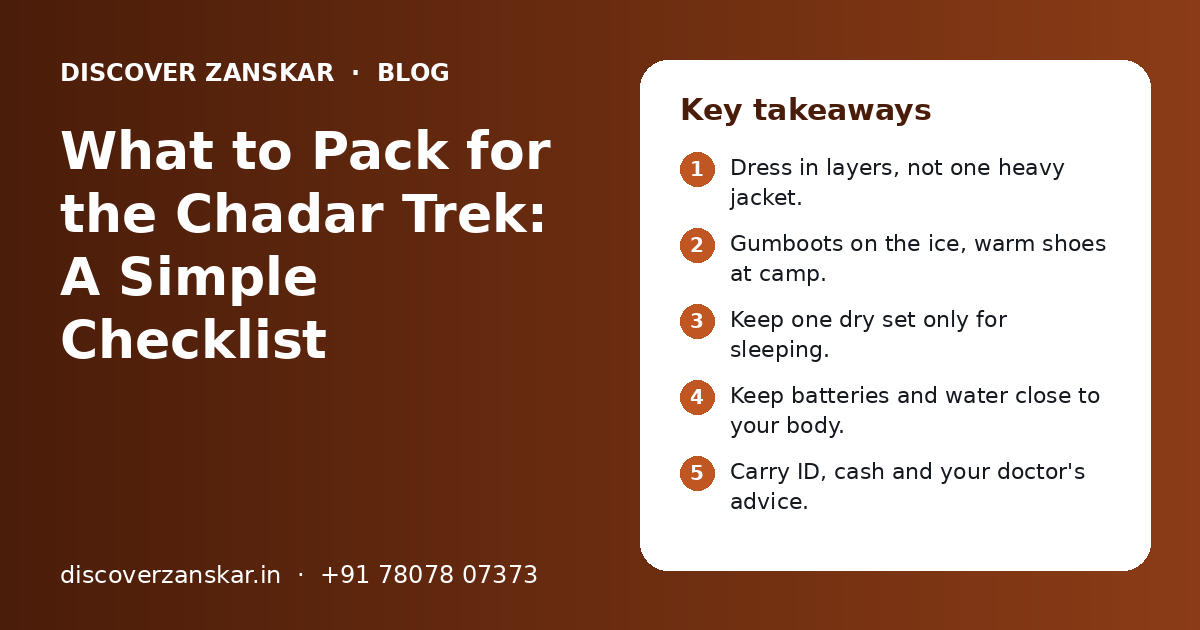
- Dress in layers, not one heavy jacket.
- Gumboots on the ice, warm shoes at camp.
- Keep one dry set only for sleeping.
- Keep batteries and water close to your body.
- Carry ID, cash and your doctor's advice.
- Rent bulky gear in Leh; buy personal items.
Why does the Chadar trek packing list matter so much?
Your Chadar trek packing list matters because the trek happens in deep winter, on ice, far from shops and roads. It is very cold in the day and often far below zero at night, so missing one key item can make the whole trek hard or unsafe.
On a summer trek, you can buy socks in the next village. On the Chadar, there is almost nothing to buy once you start. What you carry from Leh is what you have.
If you have not read about the trek itself yet, start with our Chadar trek guide. It explains the route, the season, the difficulty and how the trek is planned. This post only covers what to pack.
How should you layer your clothes for the Chadar trek?
Use three layers: a thermal base layer, a warm middle layer and a windproof outer layer. Add or remove layers as you walk, so you stay warm but do not sweat.
Sweat is the hidden enemy. When you stop walking, wet clothes get cold very fast.
Layer 1: base layer
Two sets of thermal inners (top and bottom). Pick wool or synthetic fabric that pulls sweat away from your skin. Avoid cotton, as it stays wet. Keep one set only for sleeping.
Layer 2: middle layer
One or two fleece jackets, or a warm sweater. Add fleece or thermal trousers for your legs. This layer traps body heat.
Layer 3: outer layer
A good down jacket with a hood for camp and rest stops. A light windproof or waterproof jacket for walking. Waterproof or snow trousers over your thermals.
Most trekkers walk in a base layer, fleece and windproof shell, and wear the down jacket at breaks and camp. See our Zanskar travel tips for more cold-weather advice.
What footwear do you need for the Chadar trek?
Most trekkers use gumboots for walking on the ice, and carry a pair of warm, waterproof trekking shoes for camp. Your trek team will tell you what works best for that year's ice.
Gumboots are common because they keep water out when the ice is wet or thin near the edges. Ordinary trekking shoes can soak through on wet ice. Gumboots are simple and many trekkers buy them in Leh before the trek.
- Gumboots one size bigger, so thick socks fit inside
- Warm, waterproof trekking shoes for camp and rest
- Many pairs of woollen socks, plus thin liner socks
- Microspikes or ice grips if your team suggests them
- Gaiters, if your team recommends them for snow
- Spare laces and a small bag to keep camp shoes dry
Cold feet are one of the most common problems on the Chadar. Change into dry socks every evening. Never sleep in damp socks. Keep a fresh pair inside your sleeping bag so they stay warm for the morning.
What do you need for sleeping warm on the Chadar trek?
You need a sleeping bag rated for deep winter cold, a warm liner and a dry set of clothes worn only at night. Ask your trek team what they provide, as many teams give tents, mats and sleeping bags.
Nights are the coldest part of the trek. Most trekkers sleep in tents, and sometimes in caves or simple shelters along the river. A good night's sleep helps you walk well the next day.
- 1
Check the sleeping bag
Ask what temperature it is rated for. It should be meant for deep winter, not a summer camp.
- 2
Add a liner
A fleece or thermal liner adds warmth and keeps the bag clean.
- 3
Change into dry clothes
Put on your night thermals, dry socks, a woollen cap and light gloves.
- 4
Keep key things inside the bag
Water bottle, phone, power bank and the next day's socks stay warm with you.
How do you protect your hands, head and face in the cold?
Carry two layers of gloves, a woollen cap, a balaclava or neck warmer, and good sunglasses. Fingers, ears, nose and eyes are the parts that suffer first in deep cold and bright sun on ice.
Hands
Thin inner gloves for small tasks, plus thick waterproof outer gloves or mittens. Carry one spare pair. Mittens are warmer than gloves.
Head
A woollen cap that covers your ears. Your jacket hood adds more warmth in wind.
Face and neck
A balaclava or neck warmer. Pull it over your nose and mouth in cold wind.
Eyes
Dark sunglasses with side cover. Sun on ice and snow is very strong and can hurt your eyes.
Skin and lips
Sunscreen, lip balm and a thick cold cream. Wind and dry air crack the skin fast.
Need help with your project?
Talk to the Discover Zanskar team. Free first call, simple advice, clear quote.
Which medicines and first aid should you carry?
Carry a small personal first aid kit and the medicines your doctor advises for a cold, high-altitude trek. Please see a doctor before you go, and do not start any medicine on your own.
- Your regular medicines, with extra for delays
- Medicines your doctor suggests for cold, cough, fever, headache and stomach upsets
- Band-aids, blister pads, crepe bandage and antiseptic cream
- ORS or electrolyte sachets
- Lip balm, cold cream and a small sunscreen
- A copy of your prescription and any medical notes
Keep medicines in a small pouch inside your daypack, not deep in the main bag. Some liquids and creams can freeze, so keep them close to your body during the day.
How do you look after batteries, phones and documents on the trek?
Keep batteries warm inside your jacket and sleeping bag, and keep your ID and papers in a waterproof pouch. Cold kills batteries fast, and wet papers are hard to replace in a remote valley.
Phones, cameras and power banks
Signal is very weak on most of the trek, so use flight mode to save power.
- Two charged power banks, kept warm
- Spare camera batteries in an inside pocket
- A head torch with spare batteries
When you bring a cold phone or camera into a warm tent, water can form inside it. Put it in a zip-lock bag before you bring it in, and let it warm slowly.
Documents, rules and cash
Carry valid government photo ID and a few copies. Registration, the medical check and trek rules are handled by the official authorities in Leh, so check the latest official update before you go.
In recent seasons, trekkers have had to rest a few days in Leh to adjust to the altitude and pass a medical check there. Rules can change each year.
- Original government photo ID
- Two or three photocopies of your ID
- Any travel or medical insurance papers you have
- Emergency contact numbers written on paper
- Enough cash from Leh, as there are no ATMs on the trek
Winter flights to Leh can be delayed by weather, so keep spare days. See our how to reach Zanskar guide. For signal and cash advice, read our Zanskar travel tips.
What should you rent, buy or leave at home for the Chadar trek?
Rent or use team-provided bulky gear like sleeping bags and some heavy jackets. Buy personal items like thermals, socks, gloves and gumboots, because fit and hygiene matter for these.
| Item | Rent or use team gear | Buy and own |
|---|---|---|
| Sleeping bag | Often provided or rented | Only if you trek often |
| Heavy down jacket | Can be rented in Leh | Good if you visit cold places often |
| Gumboots | Not ideal | Buy |
| Thermals and socks | No | Buy |
| Gloves and mittens | No | Buy |
| Trekking poles | Can be rented | Buy if you trek often |
| Microspikes | Can be rented | Optional |
| Rucksack and daypack | Can be borrowed | Buy if you trek often |
Our Zanskar trip cost guide explains what changes the cost of a trip, including gear and season.
What not to pack
Leave behind cotton clothes, jeans, heavy extra items and anything you cannot carry. A light, smart bag is easier on the ice and keeps you safer.
Do pack
- Wool and synthetic layers
- Dry set for sleeping
- Spare socks and gloves
- Small, warm power banks
Do not pack
- Cotton t-shirts and jeans
- Many heavy books or gadgets
- Glass bottles and big toiletry kits
- Single-use plastic you will throw away
Carry back all your waste. Respect local people, ask before taking photos and stay with your group on the ice.
What does the full Chadar trek packing list look like?
Here is the full Chadar trek packing list in one table. Tick each item before you leave home, and again in Leh before the trek starts.
| Category | Item | Must or optional |
|---|---|---|
| Clothes | Thermal inner set (top and bottom) | Must |
| Clothes | Fleece jacket or warm sweater | Must |
| Clothes | Fleece or thermal trousers | Must |
| Clothes | Down jacket with hood | Must |
| Clothes | Windproof or waterproof jacket | Must |
| Clothes | Waterproof or snow trousers | Must |
| Feet | Gumboots, one size bigger | Must |
| Feet | Warm waterproof shoes for camp | Must |
| Feet | Woollen socks | Must |
| Hands and head | Inner gloves and outer gloves or mittens | Must |
| Hands and head | Woollen cap and balaclava or neck warmer | Must |
| Hands and head | Sunglasses with side cover | Must |
| Sleep | Deep-winter sleeping bag and liner | Must (often provided) |
| Health | Personal medicines and first aid kit | Must |
| Health | Sunscreen, lip balm, cold cream | Must |
| Gear | Rucksack and small daypack | Must |
| Gear | Head torch with spare batteries | Must |
| Gear | Water bottle with cover and a thermos | Must |
| Power | Power banks and spare camera batteries | Must |
| Papers | Photo ID, copies, photos | Must |
| Money | Cash from Leh | Must |
| Other | Zip-lock bags, wet wipes, small towel, toilet paper | Must |
Your trek team may provide tents, mats and sleeping bags. Ask for their list and pack around it.
What packing mistakes should you avoid, and how can we help?
The common mistakes are packing cotton, wearing new boots, too few socks and gloves, and leaving batteries in cold pockets. We help you plan the trip around the trek, so you can focus on packing well.
Common Chadar packing mistakes
- Packing cotton clothes that stay wet and cold.
- Wearing new boots without breaking them in.
- Sleeping in the same damp socks you walked in.
- Keeping phones and power banks in outer pockets.
- Forgetting cash and depending on UPI or ATMs.
- Not checking the latest rules for registration and the medical check.
How Discover Zanskar helps you plan
We plan Zanskar trips, including treks, Leh stays, cabs and custom itineraries. For the Chadar, we help plan your days in Leh and guide you on what to rent and buy. Check the latest official update on rules before you go.
Want to see Zanskar by road in summer? See our Zanskar tour package, the best time to visit Zanskar and our Zanskar trip with family guide.
Call or WhatsApp +91 78078 07373, or use our contact page. Share your dates and group size, and we will send you a trip plan and a clear quote.
Frequently Asked Questions
What is the most important item on a Chadar trek packing list?
There is no single item, but warm, dry feet and hands matter most. Carry gumboots for the ice, warm shoes for camp, many pairs of woollen socks and two layers of gloves with a spare pair. A deep-winter sleeping bag and a good down jacket come close behind. Cold feet and hands are the most common problems on this trek.
Are gumboots really needed for the Chadar trek?
Many trekkers use gumboots on the ice because they keep water out when the ice is wet or thin near the edges. Regular trekking shoes can soak through. Buy them one size bigger so thick socks fit inside, and walk in them for a few days before the trek. Your trek team will tell you what works for that year's conditions.
Can I rent Chadar trek gear in Leh?
Yes, Leh has shops that sell and rent winter gear in the trek season, such as jackets, sleeping bags and trekking poles. Stock and quality vary, so check zips, hoods and ratings before you take anything. Buy personal items like thermals, socks, gloves and gumboots. Ask your trek team what they already provide.
How many layers of clothes do I need for the Chadar trek?
Plan three layers: a thermal base layer, a warm fleece middle layer and a windproof or down outer layer. Wear fewer layers while walking so you do not sweat, and add the down jacket at rest stops and camp. Carry two thermal sets so one stays dry only for sleeping. Avoid cotton, as it stays wet.
What documents should I carry for the Chadar trek?
Carry original government photo ID, a few photocopies, passport-size photos, travel tickets and any insurance papers. Registration, the medical check and trek rules are handled by the official authorities in Leh, and they can change each season. Check the latest official update before you go. Also carry enough cash, as there are no ATMs on the trek.
Which medicines should I take on the Chadar trek?
Please see your doctor before the trek and carry what they advise for a cold, high-altitude trip. Take your regular medicines with extra for delays, a basic first aid kit, blister pads, ORS and a copy of your prescription. Do not start any new medicine on your own. Keep the pouch in your daypack so it is easy to reach.